Music · Lessons
Hindustani Vocal
Graded North Indian classical vocal
- The traditional progression, taught in order
- Raga, tala and theory taught alongside practice
- Built for online teaching, not merely allowing it
- Graded certification supported
Get started
Talk to an advisor about Hindustani Vocal.
Free consultation, no obligation.
What this program is
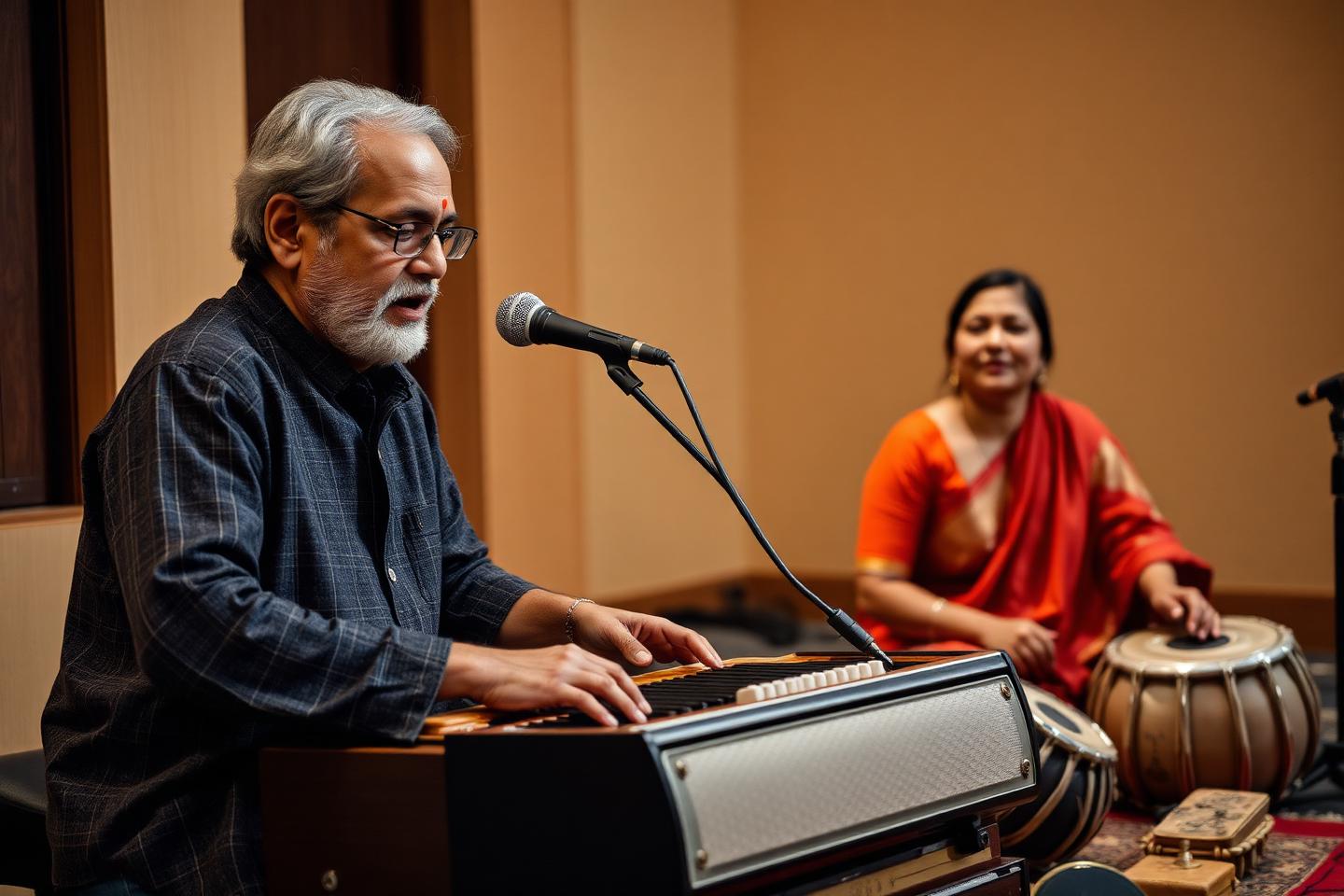
Hindustani training is built around raga as a living structure rather than a scale. A student learns the notes, then the phrases that make a raga recognisable, then the discipline of remaining inside it while improvising — which is why the early years emphasise listening and voice culture as much as repertoire.
Lessons follow that progression: voice culture and swara accuracy, alankar, then raga study with bandish in different tala cycles, then the improvisational forms. Theory is taught alongside — thaat, time theory, the structure of a khayal — so a student understands what they are doing rather than reproducing it.
As with Carnatic, online teaching is designed for. Mic placement, connection quality and how a teacher corrects what they cannot physically see are part of teacher training here, because a large share of our students learn from other time zones.
The progression
Voice culture and swara
Breath, tone and pitch accuracy against the tanpura, with sustained work on the notes before any composition. Everything later depends on this holding.
Alankar and palta
Melodic patterns across speeds, building agility, accuracy and the muscle memory the raga work assumes.
First ragas
The introductory ragas with their characteristic phrases, aroha and avaroha, and the pakad that makes each one recognisable.
Bandish and tala
Composed pieces in different tala cycles, developing rhythmic accuracy and the relationship between text, melody and cycle.
Improvisation
Alap, behlava, taan and layakari — remaining inside the raga while improvising, which is the discipline the whole training builds towards.
Theory, listening and performance
Thaat classification, time theory and the structure of a khayal, plus guided listening and preparation for exams and concerts.
Format and logistics
- Live 1:1, online or in person
- 45 or 60 minutes weekly
- Daily riyaz with the tanpura, guided by a weekly plan
- A voice assessment with the teacher you would study under
- Graded exams supported where the family wants them
- Scheduling for families outside India
What you leave with
- Swara accuracy that holds under sustained singing
- A working repertoire of ragas and bandishes
- The beginnings of disciplined improvisation
- Graded certification, where that is the goal
Pricing
Pricing for this program depends on format, cadence and length, so we quote it on the consultation call rather than publishing a number that would be wrong for most families. Ask an advisor — the call is free and there is no obligation.
Common questions
Please read before enrolling
Music tuition only. Progress and any graded-exam result depend on regular home practice; we do not award grades, and entry to an external examination board is arranged separately.
Starting Classical Vocal Training
Six sections, one sitting
Ready to start?
Book a free 20-minute consultation. We'll review goals, timeline, and recommend a coach.
Request your consultation