Dance · Lessons
Classical Dance Training
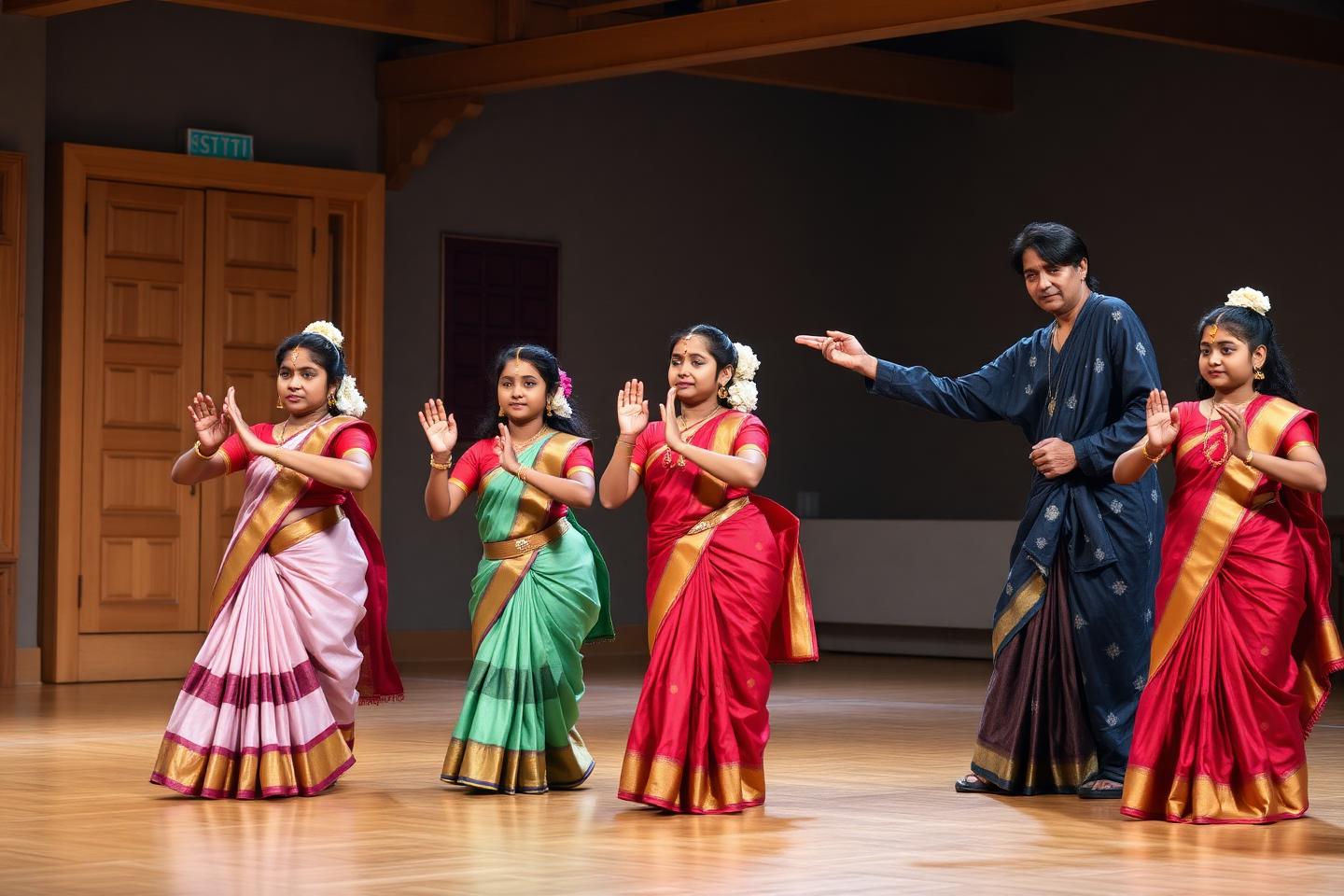
Guru-led training in five classical forms
- Five forms, each taught by a guru trained in it
- Foundation years taught properly, not skipped
- Annual assessment against graded standards
- Arangetram preparation over years, not months
Get started
Talk to an advisor about Classical Dance Training.
Free consultation, no obligation.
What this program is
Classical Indian dance is a long training, and the foundation years are repetitive by design. Adavus before choreography, alignment before speed, and years of it. A school that rushes a student to a performance piece in the first year is selling something other than training, and the shortfall shows up later in a body that cannot hold the form.
So the structure here is deliberately slow at the start. Foundation, then vocabulary, then abhinaya — the expressive language that separates classical dance from choreography — then repertoire, with annual assessment marking real progress rather than attendance. Students who choose to work towards an Arangetram do so on a timeline of years, with the preparation treated as a two-year undertaking rather than an event to be booked.
Each of the five forms is taught by a guru trained in that form. We do not ask a Bharatanatyam guru to take a Kathak batch, because the vocabularies, the rhythm systems and the pedagogy are genuinely different disciplines.
The path
Foundation
Posture, alignment, basic positions and the first adavus or equivalent vocabulary, drilled to correctness before speed. The least glamorous stage and the one everything later depends on.
Vocabulary and rhythm
The full movement vocabulary of the form together with its rhythm system — tala, counting and the relationship between footwork and cycle.
Abhinaya
Expression and storytelling: hasta vocabulary, facial expression and narrative. This is the part that distinguishes classical dance from choreography, and it is taught as a discipline rather than left to instinct.
Repertoire
The traditional items of the form, learned in the conventional sequence, each one demanding a level of technique the previous item built.
Annual assessment
A yearly assessment against graded standards, with written feedback. It marks real progress instead of leaving a family to guess from watching class.
Arangetram preparation
For students who choose it: a two-year preparation covering the full repertoire, stamina, live-music rehearsal and the practical organisation of the debut.
Format and logistics
- In person and live online
- Weekly class plus daily home practice
- Bharatanatyam, Kuchipudi, Kathak, Odissi, Mohiniyattam
- Annual, with written feedback
- Optional; prepared over roughly two years
- Gurus teaching minors are background checked
What you leave with
- A technically correct foundation in your chosen form
- Command of the rhythm system, not just the steps
- Expressive range developed as a taught skill
- Graded progress recorded year by year
Pricing
Pricing for this program depends on format, cadence and length, so we quote it on the consultation call rather than publishing a number that would be wrong for most families. Ask an advisor — the call is free and there is no obligation.
Common questions
Please read before enrolling
Dance is physical activity and carries a risk of injury. Classes are taught to a level, not to a body — please tell your teacher about any condition or injury before you start.
Choosing a Dance Programme
Six sections, one sitting
Ready to start?
Book a free 20-minute consultation. We'll review goals, timeline, and recommend a coach.
Request your consultation