Music · Lessons
Carnatic Vocal
Graded South Indian classical vocal
- The traditional sequence, taught in order
- Raga and tala theory alongside practice
- Built for online teaching, not merely allowing it
- Graded certification supported
Get started
Talk to an advisor about Carnatic Vocal.
Free consultation, no obligation.
What this program is
Carnatic training has a sequence that has held for a long time because it works: voice culture and swara exercises, then alankaras, geethams, varnams and krithis, each stage building the shruti discipline and rhythmic accuracy the next one assumes. Students who skip ahead to songs they like arrive at the same wall a year later.
Lessons follow that sequence, adapted to the student's age and starting point but not shortened. Alongside it runs the theory — raga and tala structure — taught as something to understand rather than memorise, because a student who understands the structure can learn new compositions largely on their own.
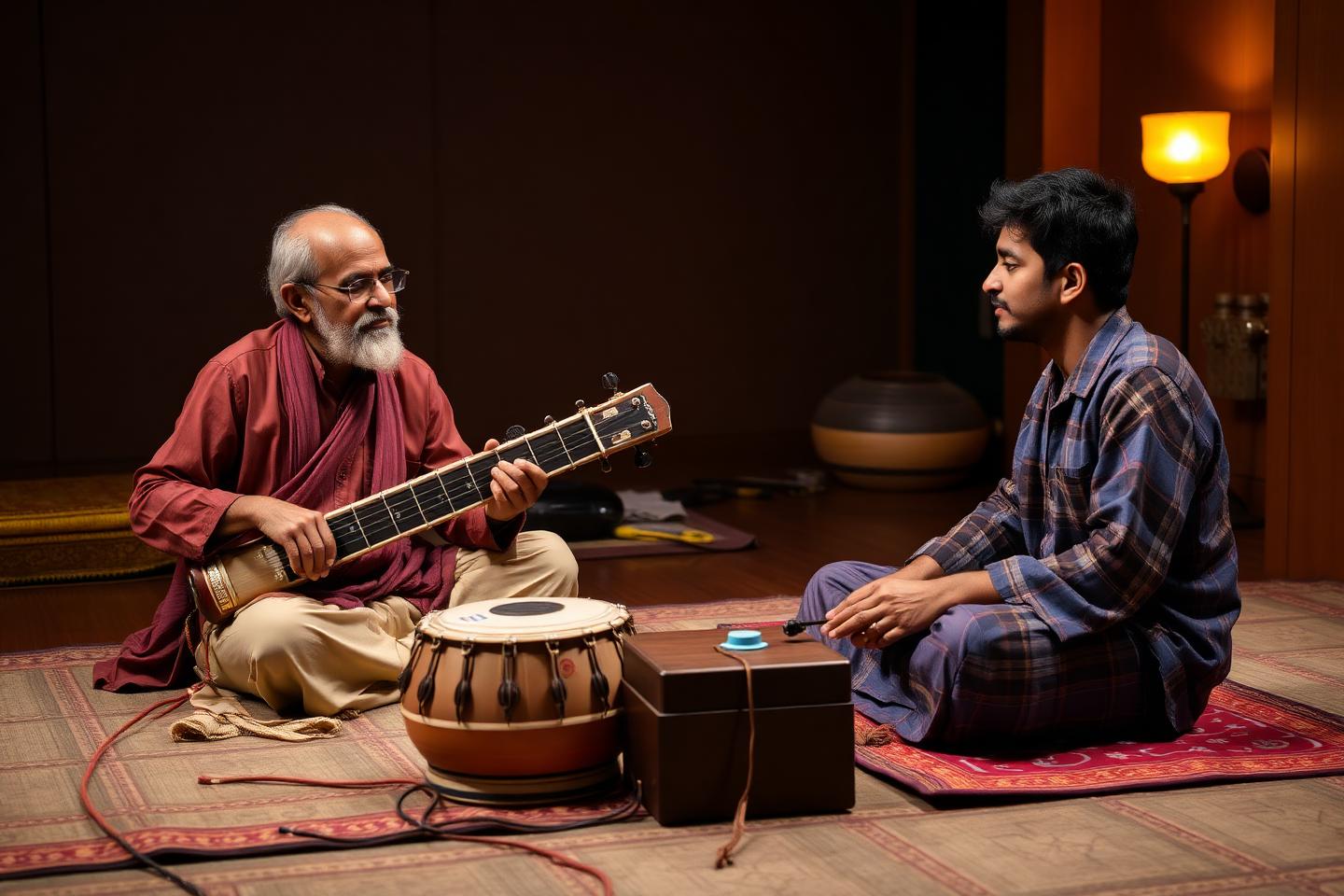
Online instruction is designed for rather than tolerated. Teaching voice over video needs different technique — microphone placement, latency, correcting breath you cannot see — and our teachers are trained for it, because a large share of our students are in other time zones.
The traditional sequence
Voice culture and shruti
Breath, tone and pitch accuracy against the tanpura. Shruti discipline is established first because everything afterwards is built on it.
Sarali, janta and alankara
The foundational swara exercises across speeds, developing accuracy, rhythm and the muscle memory the later repertoire assumes.
Geetham and swarajathi
First compositions, introducing lyrics, melodic phrasing and the relationship between text and swara.
Varnam
The pivot of Carnatic training — technically demanding, and the point at which a student's foundation is either evident or exposed.
Krithis and repertoire
The composed repertoire, chosen by raga and by what the student's technique can currently carry, with attention to the composer's structure.
Manodharma and performance
Introduction to improvisation — raga alapana and kalpana swaram — for advanced students, plus preparation for concerts, competitions and graded exams.
Format and logistics
- Live 1:1, online or in person
- 45 or 60 minutes weekly
- Daily short practice with the tanpura, guided by a weekly plan
- A voice assessment with the teacher you would study under
- Graded exams supported where the family wants them
- Scheduling for families outside India
What you leave with
- Shruti accuracy that holds without accompaniment
- A repertoire of compositions you can perform
- Enough raga and tala theory to learn new pieces largely independently
- Graded certification, where that is the goal
Pricing
Pricing for this program depends on format, cadence and length, so we quote it on the consultation call rather than publishing a number that would be wrong for most families. Ask an advisor — the call is free and there is no obligation.
Common questions
Please read before enrolling
Music tuition only. Progress and any graded-exam result depend on regular home practice; we do not award grades, and entry to an external examination board is arranged separately.
Starting Classical Vocal Training
Six sections, one sitting
Ready to start?
Book a free 20-minute consultation. We'll review goals, timeline, and recommend a coach.
Request your consultation